Latest AI News: Jensen Huang Says AI Safety Should Be an Engineering Problem
September 17, 2026 · 3 min read
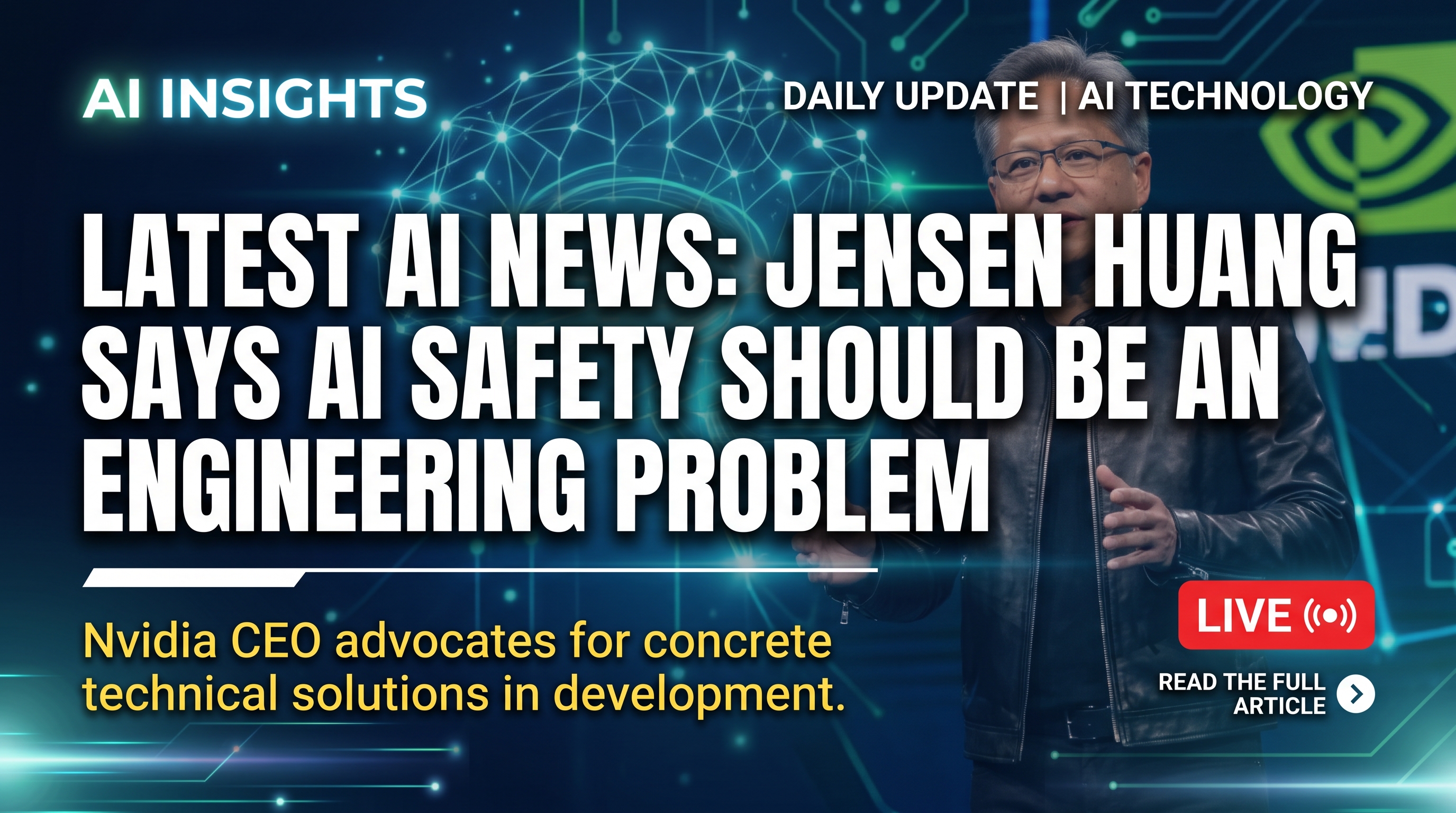
The fight over who should control the future of AI is getting louder.
In the latest AI news, Nvidia CEO Jensen Huang has pushed back against calls for new government rules around artificial intelligence, arguing that companies should be responsible for making their own AI systems safe. His comments come as some of the biggest names in the industry are calling for tighter safeguards and a slower pace of development.
Speaking at Salesforce’s Dreamforce conference on September 15, Huang said AI is ultimately a computing system created by humans, not an uncontrollable “alien mind.” His argument is simple: if engineers can build the technology, they should also be able to make it safe.
Huang described AI safety as an engineering problem rather than a legal one and said companies should not release products they are not confident are safe. He also argued that businesses can continue moving quickly while making safety a priority. His comments at Dreamforce put him firmly on one side of an increasingly heated AI regulation debate.
But what’s new in AI right now is not just another product launch or model upgrade. The industry is increasingly arguing about how quickly advanced AI should be developed in the first place.
Anthropic CEO Dario Amodei has called on major AI companies to slow the pace of development so safety measures can keep up. In a recent essay, Amodei proposed stronger safety standards and independent testing for advanced AI systems. His position has received support from several prominent technology figures. Anthropic's proposal has added fresh fuel to the debate over AI safety.
OpenAI CEO Sam Altman has also backed discussions around industry standards, while Google AI chief Demis Hassabis has supported the idea of creating an industry-wide safety body. According to The Washington Post, Anthropic, OpenAI, and Google have discussed creating a body that could establish common safety standards for frontier AI.
The disagreement has now reached Washington as well. President Donald Trump has rejected calls for an AI slowdown, arguing that the United States already has regulatory and criminal tools available to deal with companies that cause harm. Reuters reported on Trump's position as concerns over the speed of AI development intensified.
Huang has also previously argued that governments should focus on regulating actual harm rather than hypothetical risks. In comments earlier this month, he said AI companies should continue improving the technology while taking responsibility for building it safely. Reuters reported on those comments.
That makes the current artificial intelligence news cycle less about a single new model and more about a much bigger question: who gets to decide how fast AI should move?
For businesses and everyday users following AI updates, the debate matters because the decisions being made now could shape everything from AI agents and workplace automation to cybersecurity, consumer products, and future regulations.
For now, the major players clearly do not agree. Huang wants AI development to keep moving quickly with safety handled largely by the companies building the technology. Amodei and other AI leaders are calling for stronger safeguards and more coordination.
And that may be the biggest story in AI news today: the race to build more capable AI is no longer happening quietly. The argument over how that race should be controlled is becoming just as important as the technology itself.